








A CRM record built around one contact can tell you that an account is active. It can’t tell you who else is involved, what role they play, or whether the buying group behind the deal has enough support to move it forward. Buying group visibility closes that gap: it shows the full set of people taking part in a purchase decision, not just the one contact your CRM captures.
Who makes up the buying group?
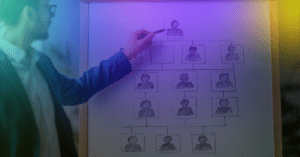
B2B buying decisions are rarely made by one person. The typical buying group differs from deal to deal, but it usually includes an economic buyer, one or more technical evaluators, end users, and procurement, legal, or security reviewers, along with a champion who advocates for the purchase internally. Each role brings a different kind of scrutiny to the purchase, and a deal usually needs several of them satisfied before it moves.
The champion is usually the only one who announces themselves. They’re the person replying to emails and taking the calls, which makes them the one contact a CRM captures. The rest of the group is still active, reading documentation, comparing pricing, raising questions internally, but none of it shows up against a name. That single point of contact is often the only signal a team has to go on, right up until the deal either closes or stalls.
Why buying group visibility matters more now
Buyers are avoiding sales conversations for more of the purchase process, and increasingly relying on AI tools to do their own research instead. In a March 2026 sales survey, Gartner found that 67% of B2B buyers now prefer a rep-free buying experience, and 45% had used AI during a recent purchase. This isn’t limited to any one industry or deal size, buyer groups across sectors are moving through more of the process before a rep is ever involved. Comparing vendors, checking documentation, and validating claims can now all happen through a chat interface, without a single outbound call.
Because most of that research happens before a rep is ever involved, the person who finally shows up in your CRM is usually close to a decision already. The rest of the buying group has been reading, comparing, and debating internally the whole time, it just happens in channels most marketing and sales teams can’t see. By the time a rep does get involved, the best chance to influence that decision has already passed.
What changes once you have buying group visibility?
Buying group visibility shows four things an account record alone can’t:
1. Who’s involved
Instead of one name standing in for the whole account, the record lists everyone active by name and role, however many that turns out to be, three people or 12. A rep can see which specific person from each department is engaged and what they are looking at.
2. How it’s changing
Engagement isn’t static. Visibility tracks whether the group is growing, shrinking, or stalled, a new technical evaluator showing up mid-deal, or a group of six dropping to just the champion. A deal that started with one contact and grew to five engaged roles over three weeks reads very differently from one that’s had the same solitary contact since day one, even if both currently show up in the CRM as engaged.
3. What each person cares about
Every person in the group has a different concern that needs to be addressed before they’ll sign off. The economic buyer needs an ROI case they can defend to their own leadership. The technical evaluator needs to know it meets their actual requirements and holds up under how their team works day to day. The security reviewer needs clarity on how data is handled, what compliance requirements it meets, and what happens if something goes wrong. Visibility shows what each of them needs answered to move forward confidently.
4. When you can act
Without visibility, you only find out about a decision after it’s largely made. With it, you can act while the group is still forming its view, while the window to influence the outcome is still open, not after it’s closed. That’s the practical value of catching the shift early rather than reading about it after the fact.
What changes for sales and marketing?
Buying group visibility changes how sales and marketing operate day to day, in three ways.
Prioritization: accounts get ranked on real buying behavior instead of an account score. A rep working 50 open opportunities can clearly prioritize accounts where a buying decision is actively forming.
Context: reps go into calls already knowing who else is involved and what each of them needs answered. Marketing can do the same in campaigns, targeting the group that’s moving instead of a single contact.
Predictability: forecasts are based on real buyer behavior your team can see and act on, which makes pipeline more predictable. Those predictions hold up under scrutiny because the evidence behind them is real.
Where this leaves your GTM motion
A buying group is rarely visible through the one contact who shows up in your CRM. Most of it, the technical evaluators comparing options, the security reviewers checking risk, the economic buyer weighing cost, is active well before a rep is ever involved, and by the time one is, the decision is often close to made.
Buying group visibility changes that. It shows who’s involved, how engagement is changing, and what each person needs, while there’s still time to act on it. For your GTM motion, that means sales and marketing work from evidence instead of guesswork: accounts prioritized on real activity, conversations that start with context instead of building it from scratch, and a pipeline that holds up under scrutiny because it’s grounded in what buying groups are doing.
pharosIQ is a B2B buyer intelligence and demand generation company built for the AI era of go-to-market. Powered by atlasIQ, our proprietary intelligence engine, we capture observed buyer behavior across our owned B2B ecosystem, giving revenue teams visibility into how buying groups form, how decisions develop, and where demand is emerging. That intelligence can be delivered directly into your existing GTM systems or activated through pharosIQ’s full-funnel demand generation solutions.
Convert observed buyer engagement into pipeline: Let’s talk.